Behind the Grant: Jim Lively of NeighborFood Market
Jim Lively opened Lively NeighborFood Market in a rural corner of Leelanau County in August 2024, filling a gap left when the nearby village of Empire lost its only grocery store. Last year, he became one of the first farm stop operators in Michigan to receive a grant through the Michigan Department of Agriculture & Rural Development’s (MDARD) new Food Hubs and Farm Stops program — part of the state's Farm to Family initiative, which awarded more than $730,000 to food hubs and farm stops in its inaugural round. He spoke with Ella August about what that process looked like from the inside.
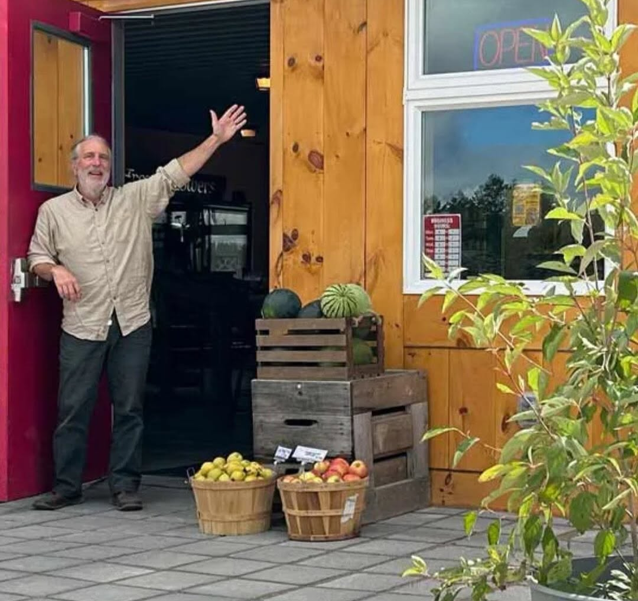
Jim Lively in front of the Lively NeighborFood Market.
October 2026
Author: Ella August
Ella August: Can you share a bit about your farm stop—where it is, how long you've been operating, and the community you serve?
Jim Lively: We are located on a state highway, in a very rural part of Leelanau County, close to the Sleeping Bear Dunes. The highway is the primary route to the Dunes for people leaving Traverse City, so we see a lot of seasonal tourist traffic in the summer, along with a significant seasonal cottage community. We’re highly seasonal and highly rural- I described our setting in our grant application as "Michigan's most rural example of a farm stop,” because there's not much around here.
Our closest village, Empire, lost its grocery store about eight years ago. People were driving all the way past us into Traverse City just to buy groceries. That was significant –there was a real need to serve that community.
We opened in August of 2024. Two weeks ago, we celebrated our second birthday, so we're heading into our third year. We’ve seen the community find us and turn us into a gathering spot.
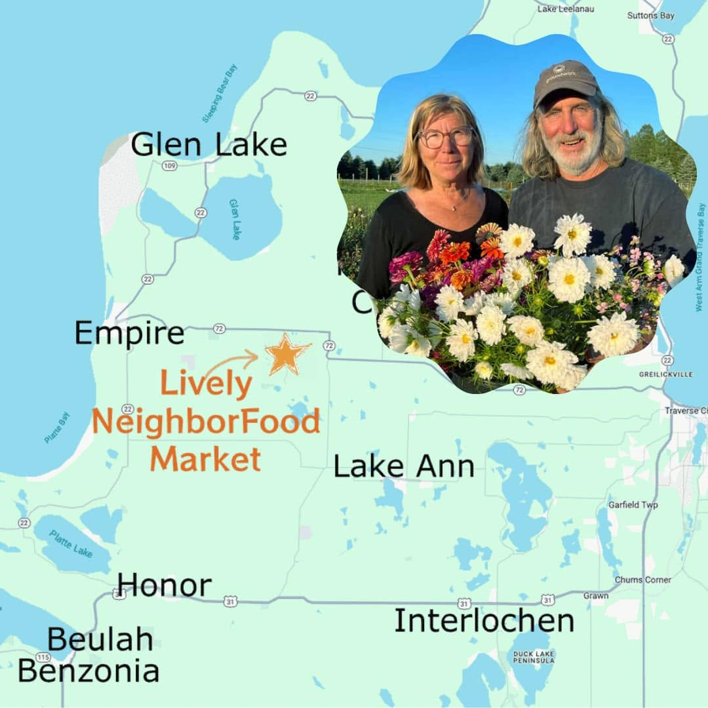
Jim and his wife, Kelly Lively and a map showing the location of Lively Neighborfood Market in Leelanau County, Michigan.
Ella August: You were open a year before you pursued grant funding. How were you financing the operation initially, and what made you start looking at grants?
Jim Lively: The property has an interesting history. It’s twenty acres that used to belong to the Eagles Club, who had plans back in the early ‘90s to build an event center with a campground and even a motel. We bought it six years ago, and it needed a lot of work- an incomplete pole building, a roof that was blowing off, an unfinished commercial kitchen, a very small septic system. And because we’re far off the highway, we also had to invest in signage just so people could find us.
We financed it as much as we could with our own resources, but that soon ran out. We got the market up and running, but we couldn’t finish the commercial kitchen and we were short on capital for inventory. As a farm stop, our produce, dairy, and meat are sold on consignment, but we also purchase wholesale produces, and we were struggling to bring in a wider variety of food.
We’ve also used financing through a Community Development Financial Institutions Fund (CDFI) and bank mortgage, but we didn’t want to take on too much debt right out of the gate. Around that time, I’d been talking with Jodi Gruner, an Economic and Community Development Specialist with MDARD, who told me a grant opportunity for farm stops was coming. I was excited- we’d built our farm stop following the Argus model, and the grant call had “farm stop” right in the name. I figured we’d have a good shot.
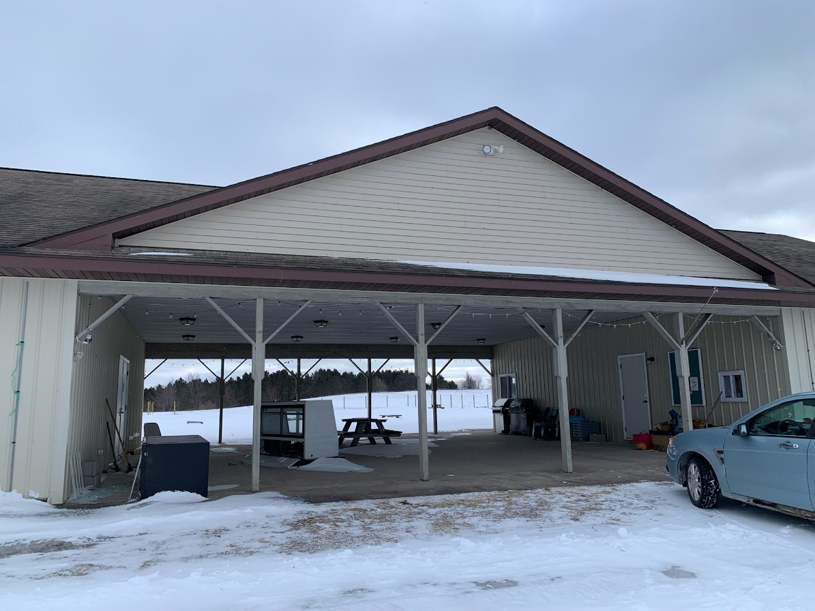
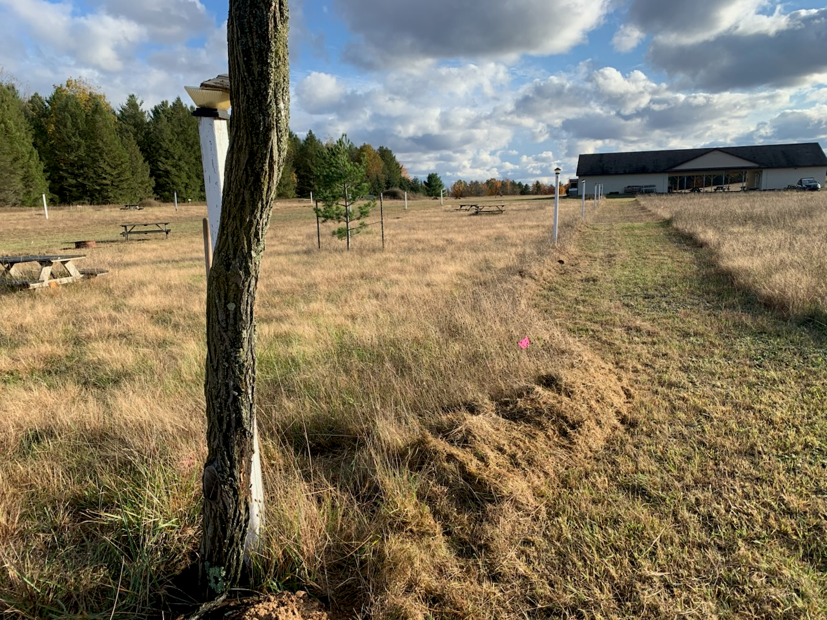
The building (above) and property (below), once owned by the Eagles Club, before it became Lively NeighborFood Market. The building needed significant work, including roof repairs and a completed commercial kitchen.
Ella August: Was this the first grant you wrote, or did you have experience?
Jim Lively: Actually, I've written grants my entire career. I spent 22 years working for a nonprofit called Groundwork Center for Resilient Communities based in Traverse City, doing regional planning and advocacy for local agriculture. That’s actually how I became familiar with Argus. So I wasn’t intimidated by the process- but I am mindful that grant writing takes real time, and I don’t like taking long shots. Because this grant was specifically targeting farm stops, I felt like it was worth the investment.
I don’t have any retail or business background, though I've always worked in government or nonprofit, so that part is new territory for me.
Ella August: Your grant was $50,000. What did you need to accomplish with that funding, and how did you arrive at those priorities?
Jim Lively: Some of it went to refrigeration, shelving, a misting system, and repairs — we'd bought used equipment that had problems. But just as important was having cash to purchase inventory. We'd opened with bare shelves and no money left over. We went to the Michigan State University “Making It In Michigan” trade show and met a lot of Michigan food businesses we could buy from wholesale. Having capital available let us actually do that.
Ella August: Were there other funding opportunities you looked at before or alongside the MDARD grant?
Jim Lively: I applied twice to the Michigan Rural Business Development Grant and didn't get it either time. That taught me to be careful about how many grants you pursue — it takes a lot of time, and you have to wait to hear back before you can reasonably pursue the next one.
I've written a lot of grants as a nonprofit employee, but a business ultimately needs to thrive on sales, not grants. That said, I was very glad to have this one. The timing was perfect — our second year, especially through the winter, was a struggle. Our population shrinks dramatically in the off-season, and we had to cut staff to stay open. Having grant funds to draw on meant we could keep paying the farms we work with. Going into our third winter, we're better prepared.
Ella August: Farm stops sit at this intersection of themes — economic development, food access, community health, agricultural support. How did you think about situating yourselves within those themes, especially given how rural your community is?
Jim Lively: We leaned into the idea that we're a community food hub — a place to gather as much of what this community grows as possible. We stock root vegetables all winter, and we've built relationships with farms doing wintertime greens. Those farms were struggling to find outlets — there's no farmers' market in the winter, and you can't run a farm stand in the cold. So we became a wintertime outlet for them, and slowly, people are finding us as a resource for fresh, local food even in the off-season.
Ella August: It sounds like you framed your market as a food access solution. Do you think that strengthened your case for the grant?
Jim Lively: I think so. That connection between the farm and the consumer—helping farmers keep farming- is what farm stops are all about, including ours.
One interesting thing I noticed is that the grant defined "farm stop" quite broadly, probably to open the opportunity to a wider range of people promoting local food. I consider Argus the experts on what a farm stop actually is — when we're making decisions, we joke, "What would Argus do?" Argus defines the model more narrowly than MDARD did in this grant call. Even knowing that, I felt like staying true to that traditional model — being authentic to it — was still the right approach, and that MDARD would appreciate it.
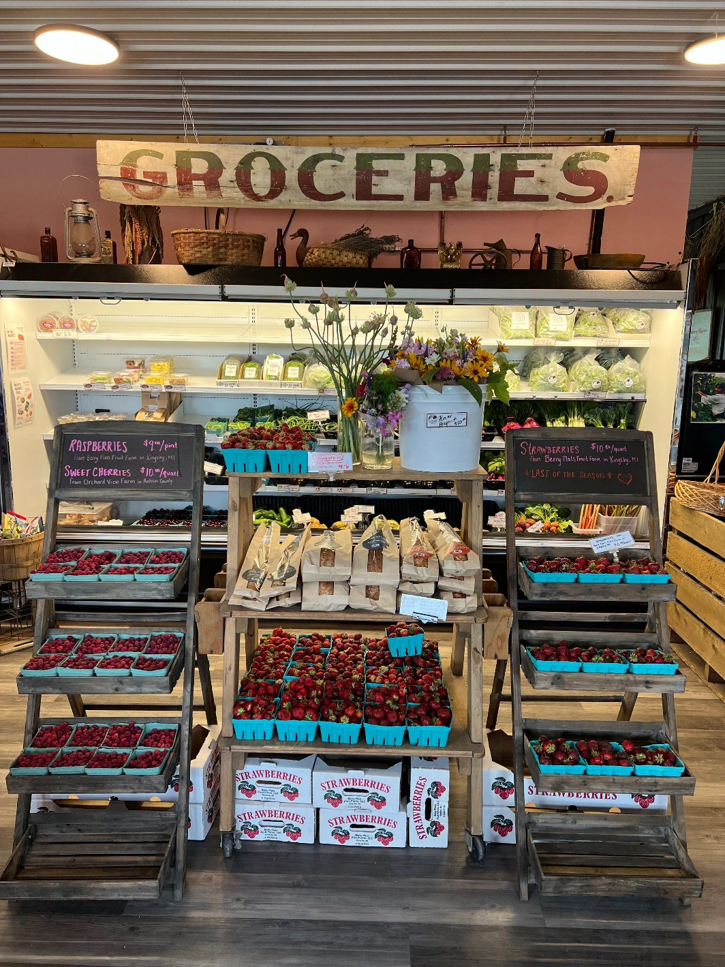
Fresh produce inside Lively NeighborFood Market.
Ella August: That's good advice-- really understanding how the funder is conceptualizing the thing you’re applying to fund, even if your own definition is narrower.
Jim Lively: Right.
Ella August: Let's talk about putting the application together. Did you prepare the entire grant application yourself or did you have help?
Jim Lively: I had some help. A friend I know through the market is a writer who also does grant writing. I told her, “I’ve got all kinds of data and ideas, but I could use help narrowing it down and making it succinct." She was very helpful.
Ella August: Was there a part of the process that was unexpectedly difficult?
Jim Lively: The writing wasn't particularly hard — the reporting was the real challenge. This grant works on a reimbursement model: they don't send you a check up front. You spend your own money first, submit receipts, and get reimbursed quarterly. That wasn't entirely clear to me at the outset, and it created real cash flow strain, especially heading into winter. I'd advise anyone new to this to understand clearly how the funds will actually be dispersed before applying — some grants pay up front, some require you to front the money yourself. And each quarterly reimbursement requires its own report on top of the receipts. My final report is actually due this week — I should be working on it right now!
Ella August: In hindsight, is there anything you would have done differently, anything you undersold or would frame differently now? I mean, you got the grant, so it was successful.
Jim Lively: The inventory need. I didn't include it to the extent I should have in the original proposal — I assumed we'd manage cash flow fine and mostly budgeted for equipment. I ended up having to submit an amendment because I hadn't accounted for how much upfront cash inventory was actually required. In hindsight, I underestimated some of those basic needs, but thankfully I was able to fix it through an amendment.
Ella August: Was there someone at MDARD you could talk to directly as you were preparing the application?
Jim Lively: Yes, and I'd tell anyone applying for a grant not to be shy about picking up the phone. The request for applications doesn't explain everything. Before I put time into the application, I called a contact — Nate Engel, MDARD's Deputy Director — to make sure the opportunity was really what it sounded like.
I actually already had a connection to him. When we opened in August of 2024, he sent me a handwritten note that said, "Congrats on opening a farm stop! We love what you're doing for Michigan agriculture." I stuck it on my bulletin board. So when this grant came up, I thought, "I'm calling this guy — he wrote me a note." He took my call, confirmed I was eligible, and pointed me toward the program officer and other useful contacts.
I also had a sense of my odds going in — I knew there weren't many farm stops in Michigan yet, so I figured the applicant pool would be small.
Ella August: Any other advice for a new farm stop operator just starting to think about grant funding?
Jim Lively: Time is valuable, so be confident in your odds before you invest it. I got turned down twice for that rural business grant, and each time meant a four-month wait to hear back — time I could have spent pursuing other opportunities. Grants aren't always the answer. Be judicious about which ones you pursue.
That said, you can often reuse material across applications. If you have a business plan, you already have language describing how you operate, your capital needs, all of that. I used pieces of my rural business grant application when I applied to MDARD.
Ella August: Anything else you'd want other new farm stop and grant-seeking operators to know?
Jim Lively: I'm spending a lot more time now thinking about loans than I used to. As a private business, you have to be careful about how much debt you take on, but there's more loan money out there than grant money, and it's often easier to tailor a loan to exactly what you need rather than contorting your plans to fit a grant's eligibility requirements. If you're starting a business, ideally you can generate enough revenue to pay the loan back. There's probably some healthy mix people should think about between grants, loans, and revenue. Ultimately, you don't want to need either — you just want to be profitable. I'm not there yet, but that's the goal.
Visit the Lively NeighborFood Market website, or visit in person at 3805 W Empire Hwy, Empire, MI 49630.